

Implementing EU Digital Battery Passport with AAS
Fullfilling EU Battery Regulation (EU)2023/1542 with standardized AAS submodels and offering data via a well-defined API.
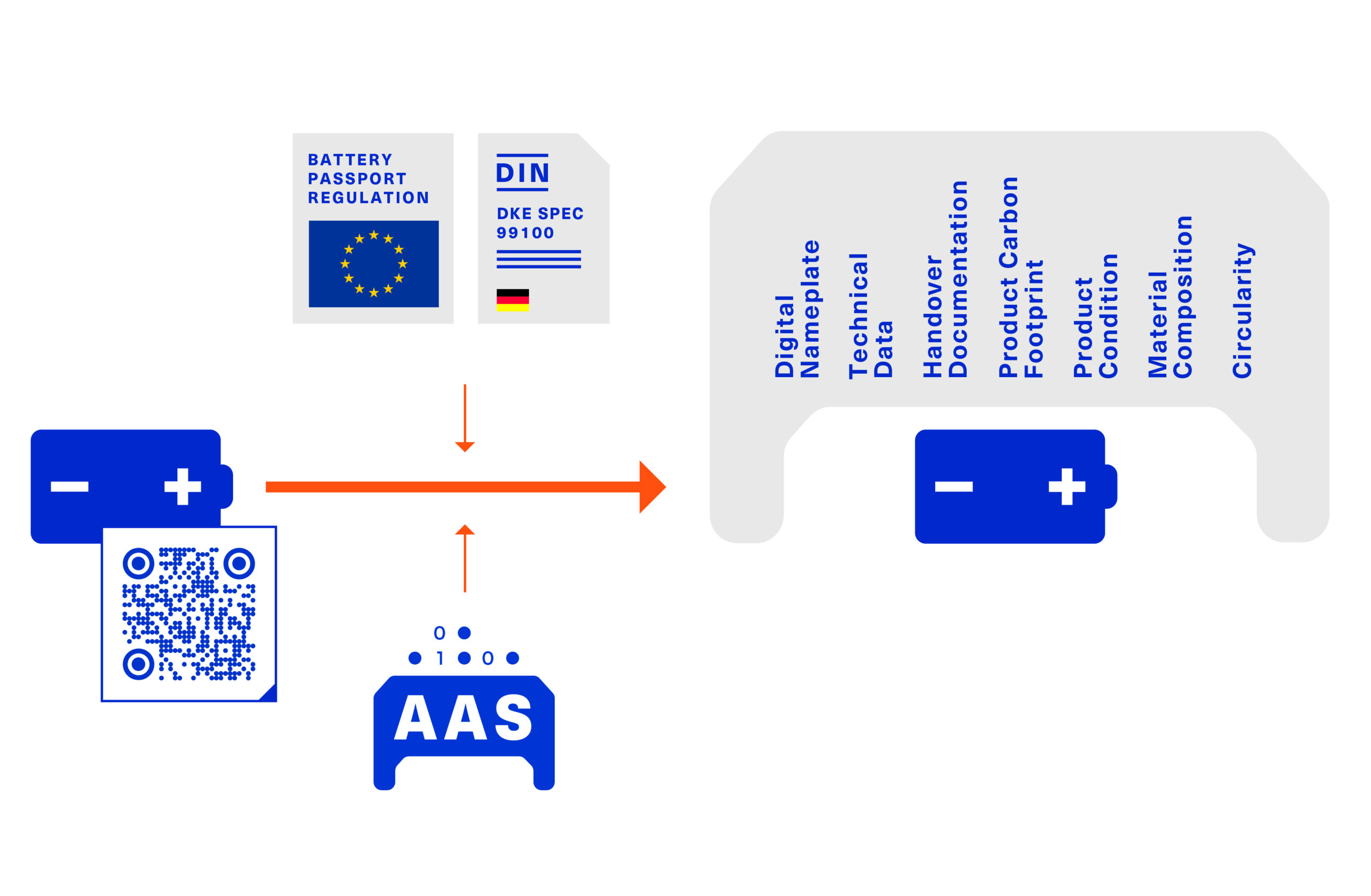
Regulatory compliance with standardised Submodels
Digital Battery Passport: legally compliant, interoperable, future-proof
The EU Battery Regulation (EU) 2023/1542 requires manufacturers of certain types of batteries – including traction batteries for electric vehicles, LMT batteries and industrial batteries above 2 kWh – to provide a digital Battery Passport via QR code from February 2027 onwards. The approach presented describes an open and standardised implementation based on the Asset Administration Shell (AAS), in which the required data is organised in a structured manner in Submodels. Via a standardised interface, authorised parties along the entire value chain and across all life cycle phases can access relevant information in a targeted manner. This combines regulatory compliance with technical interoperability and efficient data exchange.

Benefit of the Asset Administration Shell
- Fulfilling EU Battery Regulation (EU)2023/1542
- Standardized and open technology
- Semantics from Catena-X, ECLASS, IEC CDD

Collaboration Dashboard

Actively involved organisations

Used submodels

Status: Industry Ready

WG meetings


Do you have questions or would you like to get further information about the Pilot Plant? Then write us a message.